
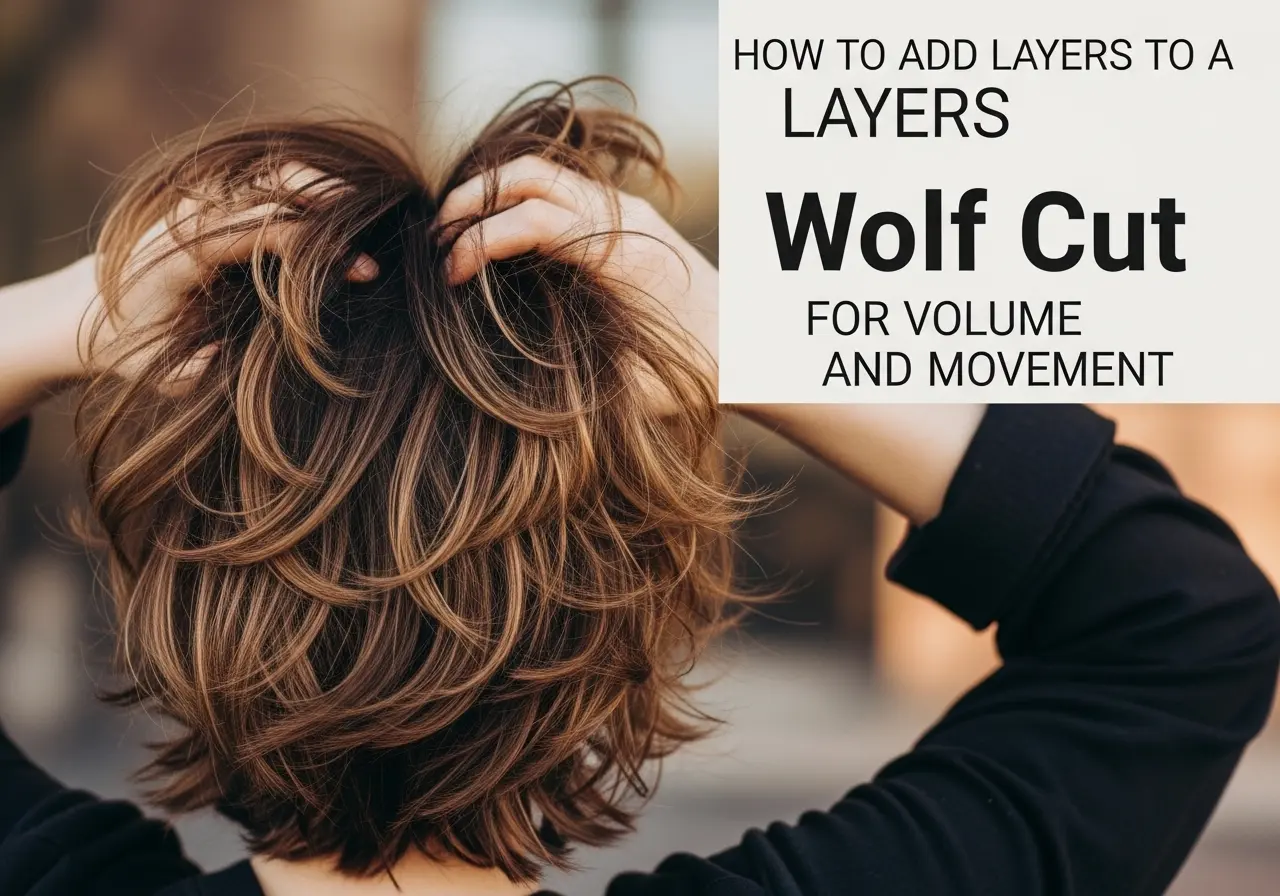
How to Add Layers to a Wolf Cut for Volume and Movement
Wolf cut layers are characterized by short, choppy sections on top that build volume and height, which blend into longer back and sides. This strategic layering creates the signature wild, untamed aesthetic that defines the wolf cut. The key to achieving authentic wolf cut volume lies in understanding how layer placement affects hair movement and dimension.
The top and crown are cut shorter to create volume, while layers around the sides and back are left longer, giving the hairstyle a wild, untamed look similar to a wolf’s mane. This contrast between short crown layers and longer perimeter sections generates the dramatic silhouette that makes wolf cuts instantly recognizable.
Essential Layering Techniques for Wolf Cuts
Point Cutting: The Foundation Technique
Point cutting is the hero technique for creating the textured, shaggy-effect of the wolf cut, using either point cutting or an open-and-close “chewing” motion until all hair is cut. This method involves holding scissors at an angle to the hair shaft and making small, precise snips that create uneven ends and textured appearance.
Point cutting delivers several critical benefits for wolf cut styling:
- Creates soft, feathered edges rather than blunt lines
- Removes weight while maintaining length
- Generates natural movement throughout layers
- Produces the signature choppy texture
- Blends layers seamlessly for cohesive appearance
When executing point cutting, work with small sections and maintain consistent tension. Cut the hair at an angle to create uneven ends and textured look, cutting into different lengths to achieve a voluminous, layered appearance.
Slide Cutting for Dimension
Slide cutting involves gliding scissors down the length to remove weight and bring in definition, creating that artfully messy look. This technique smooths transitions between layer lengths while reducing bulk without sacrificing overall density.
Execute slide cutting by opening scissors slightly and moving them down the hair shaft in a controlled motion. This approach works particularly well for thick hair requiring volume reduction while maintaining the wolf cut’s characteristic fullness.
Razor Cutting for Wispy Texture
Razor cutting swishes a razor through strands for a wispy, jagged edge, serving as a volume booster for fine hair. This aggressive texturizing method creates soft, feathered ends that enhance movement and reduce weight in heavy sections.
Razor cutting proves especially effective for:
- Creating face-framing wisps around the perimeter
- Softening blunt edges for natural appearance
- Adding lightness to thick, dense hair
- Generating lived-in, effortless texture
Texturizing with Thinning Shears
Use texturizing shears to remove bulk and create a lived-in, tousled look, especially on mid-lengths and ends. Thinning shears featuring notched blades remove internal weight without altering the outer silhouette.
Apply texturizing shears strategically rather than throughout entire sections. Focus on areas requiring volume reduction while preserving the wolf cut’s dimensional quality. Avoid over-texturizing, which can create frizzy, unmanageable results.
Step-by-Step Wolf Cut Layer Application
Crown Layer Development
The crown represents the most critical area for generating wolf cut volume. Begin by sectioning a horseshoe parting from the front hairline to the crown, isolating this area for focused layer creation.
Take a slender section along the front hairline from the center parting to the sideburn area and create a guideline for your fringe, then continue taking slender vertical subsections and outcut at 90 degrees. This elevation angle maximizes volume at the crown while establishing the foundation for remaining layers.
Cut crown layers progressively shorter moving toward the apex, creating graduated length that lifts away from the scalp. This stacking effect generates the height characteristic of well-executed wolf cuts.
Mid-Length Layer Integration
After establishing crown volume, focus on mid-length sections that connect shorter top layers to longer perimeter hair. These transition layers determine how smoothly the wolf cut flows and moves.
Take 1-inch vertical sections at 90 degrees from the crown to bangs, cutting from short to long and creating little points, then move hair all around ensuring layers sit with kicks and flips and whimsical texture. This sectioning pattern ensures even distribution throughout the head shape.
Work methodically around the head, maintaining consistent elevation and following established guidelines. The goal is seamless blending that appears effortless despite technical precision.
Face-Framing Layer Customization
Face-framing layers define how the wolf cut interacts with facial features. These strategic sections soften the overall look while drawing attention to eyes and cheekbones.
Create face-framing layers by taking small vertical sections at the front hairline and cutting to desired lengths. These pieces typically range from cheekbone to collarbone length, depending on face shape and personal preference.
Use vertical sections and deep point cutting for softness when creating face-framing pieces. This approach generates soft, movable pieces that blend naturally into surrounding hair rather than appearing disconnected or harsh.
Hair Type Considerations for Layer Placement
Fine Hair Layering Strategy
Fine hair requires careful layer placement to avoid wispy, over-thinned results. For fine hair, add soft, blended layers to build volume without making ends too wispy, requesting texture through choppy layers while avoiding short layers at the crown.
Focus fine hair layering energy on mid-lengths rather than crown areas. Excessive crown layering can expose the scalp and create flat appearance. Instead, concentrate on creating dimension throughout the middle and lower sections.
Thick Hair Volume Management
Thick hair benefits from aggressive internal layering that removes weight while maintaining surface dimension. For thick hair, focus on removing weight strategically without losing the cut’s signature shape through razoring that adds softness and texture.
Layer thick hair with deeper, more frequent sections than fine hair. This approach prevents the triangular silhouette that occurs when thick hair lacks internal texture. Combine cutting techniques—point cutting for surface texture, slide cutting for internal weight removal, and razor work for softened edges.
Curly Hair Layer Adaptation
Curly hair demands specific layer placement that respects natural curl patterns. For curly hair, cut while damp to better see the curl shape, using curl-defining products to highlight layers and scheduling trims every 6-8 weeks.
Avoid over-layering curly hair, which can create pyramid shapes or excessive volume. Instead, focus on strategic layers that enhance curl definition while maintaining weight for controlled silhouette. Cut curly wolf cuts slightly longer than intended, as curls spring up after drying.
Wavy Hair Enhancement
Wavy hair wolf cut allows natural wave pattern to enhance layers, creating effortless movement and relatively low-maintenance styling that can be air-dried. This hair type naturally complements wolf cut aesthetics, as waves amplify layer definition without additional styling effort.
Layer wavy hair to emphasize natural movement patterns. Observe how waves fall naturally and cut layers that follow these organic directions for enhanced definition.
Advanced Texturizing Methods
Creating Negative Space
Carve in negative space throughout sections to create movement and texture, continuing this technique throughout all sections while removing weight. Negative space carving involves removing internal sections of hair while preserving external shape.
This advanced technique generates airy, movable texture that prevents heavy, solid appearance. Execute by taking small vertical slices within horizontal sections and removing weight through point cutting or slide cutting.
Graduated Layer Stacking
Graduated layering creates dimension through progressively longer sections from crown to perimeter. This traditional layering approach adapted for wolf cuts generates predictable, consistent volume.
Stack graduated layers by establishing a guide at the crown and maintaining consistent elevation through all subsequent sections. Each new section should be slightly longer than the previous, creating cascading effect.
Disconnected Layer Placement
The wolf cut features voluminous layers, choppy texture, and mix of short and long lengths with shorter top and crown sections to create volume. Intentional disconnection between layer groups enhances the wild, unstructured wolf cut aesthetic.
Create disconnection by varying elevation angles between sections or leaving distinct length gaps between layer groups. This approach generates dramatic movement and dimension while embracing the wolf cut’s rebellious character.
Styling Products for Maximum Volume
Volumizing Foundation Products
Apply volumizing product from roots to length to lift layers into more visible texture before any styling technique. Foundation products create the groundwork for lasting volume and definition.
Recommended volumizing products include:
- Volumizing Mousse: Lightweight foam that provides root lift and all-over body
- Root Lifting Spray: Targeted volume at the scalp for maximum height
- Thickening Cream: Adds density to fine hair while enhancing texture
- Dry Shampoo: Absorbs oil while generating grit and texture
Apply volumizing products to damp hair, focusing on roots and crown areas. Work products through mid-lengths with fingers, avoiding heavy concentration at ends.
Texturizing and Definition Products
Use texturizing spray to help add layers and definition to wolf cut, or sea salt spray to create beachy waves for a more natural look. These products enhance the choppy, lived-in aesthetic essential to wolf cut styling.
Essential texturizing products:
- Sea Salt Spray: Creates beachy, tousled texture with natural hold
- Texturizing Spray: Adds grit and separation without stiffness
- Dry Texture Spray: Generates instant volume and matte finish
- Styling Cream: Provides definition and movement with flexible hold
Layer texturizing products for dimensional results—apply spray to roots for volume, cream to mid-lengths for definition, and finishing spray to ends for separation.
Heat Protection Essentials
When using heat styling tools to enhance wolf cut layers, thermal protection is non-negotiable. Heat protectant spray is essential when reaching for heat tools to fend off damage.
Apply heat protectant to damp hair before blow-drying and reapply before using hot tools on dry hair. This double-layer protection shields hair from thermal damage while maintaining styling flexibility.
Blow-Drying Techniques for Enhanced Volume
Root-Focused Drying Method
Use hairdryer and rounded brush to lift hair at roots, creating volume, then blow dry layers curling them outward or inward to add shape and movement. This fundamental technique establishes the volume foundation that makes wolf cut layers impactful.
Execute root-focused drying by:
- Flip hair upside down and direct heat at roots for 2-3 minutes
- Return to upright position and lift sections with round brush
- Direct heat from underneath each section, focusing on root area
- Hold lift for several seconds before releasing
- Allow hair to cool in lifted position for lasting volume
Diffuser Attachment Benefits
Use a diffuser to dry wolf cut while maintaining volume and texture, especially beneficial for wavy and curly hair types. The diffuser disperses airflow, preventing frizz while encouraging natural texture development.
Diffuse wolf cuts by:
- Setting dryer to medium heat and low speed
- Cupping hair sections in diffuser bowl
- Lifting toward scalp to enhance root volume
- Holding stationary for 10-15 seconds per section
- Scrunching sections while drying for enhanced texture
Direction and Movement Control
Control how wolf cut layers fall and move by manipulating blow-dry direction. Blow-dry with fingers for natural lift, directing hair away from the face for enhanced movement.
Dry crown layers back and away from the face for maximum height. Direct side sections forward to create face-framing movement, then back again for dimension. Alternate drying directions throughout the head for multidimensional results.
Maintenance Schedule for Layer Integrity
Optimal Trim Frequency
Schedule trims every 6-8 weeks to maintain the wolf cut’s structure and shape while avoiding split ends. Regular maintenance preserves the intentional layer placement that generates volume and movement.
During maintenance trims, focus on:
- Reshaping crown layers that grow out and lose lift
- Redefining face-framing pieces that elongate
- Removing split ends from textured sections
- Refreshing overall shape without removing excessive length
Communicate with your stylist about layer-specific concerns rather than requesting generic trims. Specify which areas need attention for customized maintenance.
Between-Trim Preservation
Keep wolf cut looking fresh through regular trims while following a stellar hair care routine between appointments. Proper home care extends the life of professional cuts and maintains layer definition.
Between-trim care practices:
- Deep condition weekly to prevent breakage in textured ends
- Use sulfate-free shampoo to preserve natural oils
- Avoid heavy conditioner on crown areas requiring volume
- Sleep on silk pillowcases to reduce friction and preserve texture
- Refresh layers with dry shampoo and texturizing spray
Product Buildup Management
Textured, layered wolf cuts accumulate product buildup faster than sleek styles due to increased surface area and product usage. Combat buildup with clarifying treatments every 2-3 weeks to restore natural volume and movement.
Clarifying methods include:
- Clarifying shampoo that removes residue without stripping
- Apple cider vinegar rinses for gentle cleansing
- Baking soda scalp scrubs for deep cleansing
- Professional salon cleansing treatments quarterly
Common Wolf Cut Layer Mistakes to Avoid
Over-Texturizing Errors
Excessive texturizing destroys wolf cut integrity by removing too much internal structure. Over-layering can create pyramid shapes or excessive volume requiring careful balance. Restrain texturizing impulses and work gradually.
Signs of over-texturizing include:
- Frizzy, uncontrollable texture
- Inability to style smoothly when desired
- Excessive thinning at ends creating stringy appearance
- Loss of weight and body in mid-lengths
If over-texturizing occurs, allow hair to grow for several weeks before attempting corrective cutting. Deep conditioning treatments can temporarily improve manageability.
Inconsistent Layer Elevation
The wolf cut should never be one-size-fits-all, requiring adjustment of fringe length, layering amount, and disconnection degree based on individual features. Maintaining consistent elevation angles throughout cutting ensures even layer distribution.
Inconsistent elevation creates:
- Uneven volume distribution
- Disconnected sections that don’t blend
- Flat areas adjacent to overly voluminous sections
- Difficulty styling cohesively
Use sectioning clips methodically and check elevation angles frequently during cutting to prevent inconsistency.
Neglecting Face Shape Adaptation
Wolf cut layers require customization for different face shapes to achieve flattering results. Generic layer placement without considering facial structure produces unflattering proportions.
Face shape adaptations:
- Round Faces: Longer face-framing layers past jawline, volume at crown
- Square Faces: Soft, point-cut layers around jawline, wispy bangs
- Oval Faces: Most wolf cut variations work well, customize to preference
- Heart-Shaped Faces: Fuller layers at chin level, less volume at crown
- Long Faces: Avoid excessive crown height, focus on width-adding layers
Troubleshooting Volume and Movement Issues
Addressing Flat Crown Problems
For flat roots, try using volumizing products, blow-drying upside down, or using root clips while drying. Crown flatness undermines the entire wolf cut aesthetic.
Additional flat crown solutions:
- Backcomb crown sections gently before styling
- Use volumizing powder at roots for instant lift
- Change part position to create natural lift
- Consider shorter crown layers during next trim
- Avoid heavy conditioner application near scalp
Managing Excessive Bulk
When wolf cut layers retain too much weight, movement becomes restricted and shape appears heavy. For overly choppy layers, ask your stylist for more blended layers or consider growing slightly for softer look.
Bulk reduction strategies:
- Strategic thinning shear use on interior sections
- Additional slide cutting to remove internal weight
- Razoring mid-lengths and ends for softness
- Point cutting to create texture without removing length
Correcting Layer Disconnection
Extreme disconnection between layer groups creates difficulty styling cohesively. For too mullet-like appearance, ask stylist to blend transition between top and bottom sections more gradually.
Improve layer connection through:
- Additional transition layers between short and long sections
- Slide cutting to smooth harsh lines
- Adjusting elevation angles for gentler graduation
- Point cutting to soften distinct length changes
Conclusion
Mastering wolf cut layers requires understanding multiple cutting techniques, strategic layer placement, and proper maintenance protocols. The wolf cut is more than just a hairstyle—it’s a statement with textured layers, shaggy ends, and face-framing magic perfect for those wanting to unleash their inner wildness. Success with wolf cut layering depends on proper execution of point cutting, slide cutting, and texturizing techniques combined with strategic layer placement customized to your hair type and face shape. Using appropriate styling products that enhance volume and movement, along with regular maintenance every 6-8 weeks, preserves layer integrity and keeps your cut looking fresh. Whether working with a professional stylist or attempting DIY techniques, focus on creating dimension through varied layer lengths while maintaining overall cohesion. The wild, voluminous aesthetic of wolf cuts comes from intentional technical execution rather than random cutting, making education and practice essential for achieving Instagram-worthy results.

Alex Morgan is a professional hairstylist and hair trends enthusiast with over 8 years of experience in modern and classic cuts. Specializing in the wolf cut haircut for all hair types, Alex has worked with clients across the USA to create effortlessly stylish, face-framing looks that blend texture with volume.